



Inside this issue:
Ali breaks down why Q4 planning starts in July, not September. Plus: we talk to Sarah Karger about why brands and creators keep missing each other, obsess over what’s actually working in marketing, and call out the campaigns (good and bad) that shaped July.
If you’re already thinking about holiday strategy, you’re ahead of 90% of brands. If you’re not, let’s fix that before September panic sets in. Fill out our interest form to get started.
AUGUST IS NOVEMBER. AND AI IS ALREADY BUILDING ITS HOLIDAY GIFT GUIDES
Has your brand completed an AI Holiday Visibility Audit? It may be the smartest investment you make this holiday season.
Consumers may not be buying holiday gifts yet, but the platforms shaping what they will discover, consider, and purchase are already collecting signals. This year, those platforms include ChatGPT, Gemini, Perplexity, and AI-powered search.
The numbers are not subtle.
During the 2025 holiday season, traffic from generative-AI platforms to U.S. retail websites increased 693% year over year. Those visitors were also 33% less likely to leave a retail site immediately, signaling stronger relevance and purchase intent. That behavior didn’t disappear after Christmas. AI-driven traffic to U.S. retail sites remained up 393% year over year during the first quarter of 2026.
Salesforce estimates that AI and agents influenced $262 billion in global holiday spending last year. Its prediction for Cyber Week 2026? One in three e-commerce sites will have its own shopping agent.
This is no longer an experiment. It is becoming a customer-acquisition channel.
Consumers can now ask:
What’s the best skincare gift for a teenage girl?
What should I buy a Pilates-obsessed friend for under $100?
Which hostess gifts feel expensive but cost less than $50?
And receive a short, confident list of recommendations without opening Google, visiting Instagram, or scrolling through a traditional gift guide.
If your brand isn’t included in that answer, you didn’t simply miss a media placement. You missed the customer entirely.
If your brand does one thing before holiday, do this.
Determine whether AI platforms can:
Find your brand
Understand exactly what you sell
Identify who your products are for
Verify your claims through credible third-party sources
Distinguish you from competitors
Confidently recommend you for relevant holiday-shopping prompts
That is AI visibility - or GEO - and it is quickly becoming as fundamental as traditional search visibility. GEO isn’t achieved by dropping a few keywords onto a website or by publishing 12 articles written by ChatGPT.
AI recommendations are influenced by the entire body of information surrounding a brand: its website and product data, earned media, affiliate coverage, reviews, retailer listings, expert mentions, and consistency across the internet.
In other words, AI visibility is the output of an omnichannel reputation strategy.
Your PR strategy affects whether machines trust you. Your affiliate infrastructure determines whether a recommendation becomes a transaction. Your product content affects whether AI understands where your brand belongs.
At LVPR, we’re helping consumer brands identify and close these gaps now - through AI-visibility audits, 90-day GEO optimization programs, holiday press and affiliate projects, and ongoing omnichannel support.
It doesn’t have to begin with another full agency retainer. But it does need to begin before holiday shopping does.
Because August is November. And AI is already deciding what belongs on the list.
→ Book your AI Holiday Visibility Audit.
Curiously yours,
Ali
THE LITTLE THINGS
July is bringing the heat to our office chats with the following:
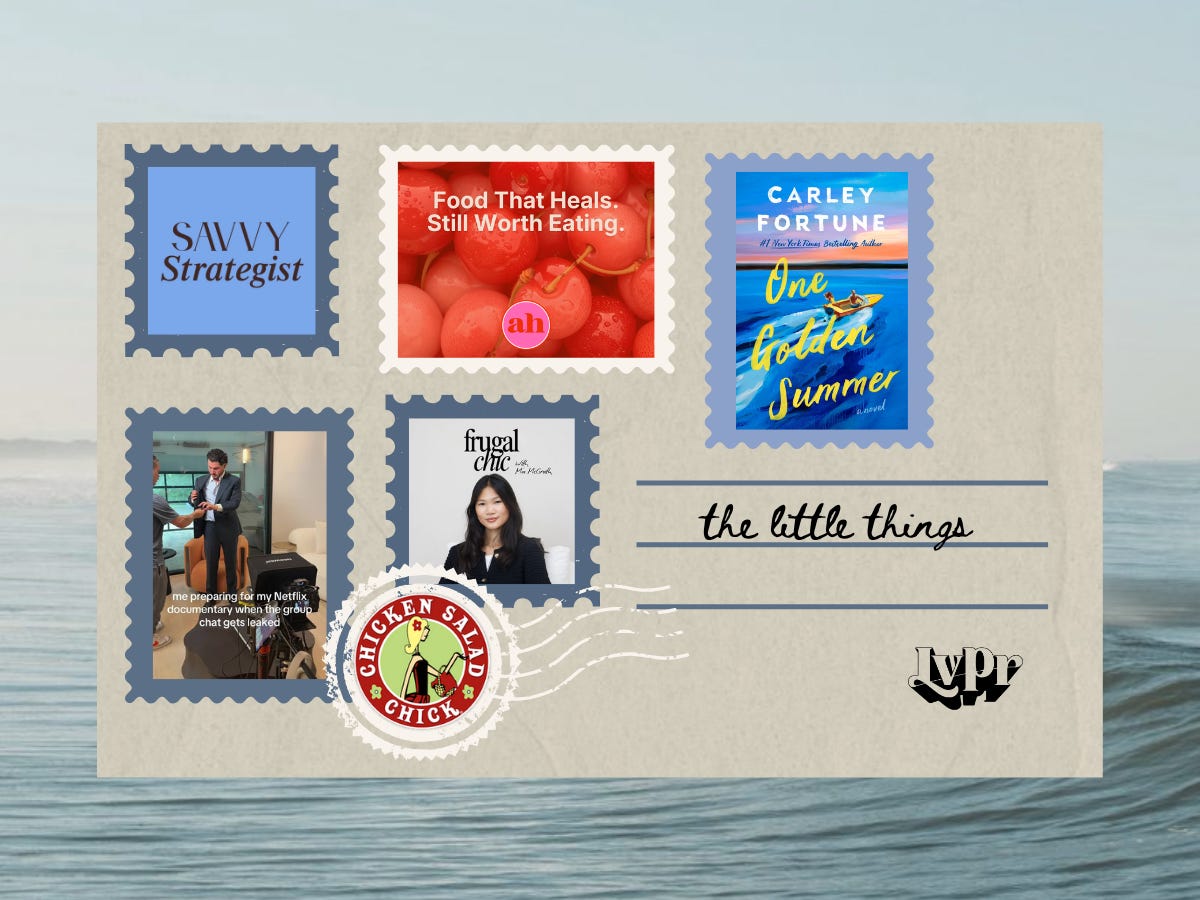
What the Little Ladies are Reading:
Savvy Strategist by Jill Grace (IG: @savvy.strategist): Weekly social and influencer strategy breakdowns from someone who’s lived it and knows what works.
Scan Club by Arcade Studios: Connects surprising consumer culture signals to the future of digital marketing.
Frugal Chic by Mia McGrath (IG: @miarose_mcgrath): A British guide to building actual wealth and taste at the same time. Funny, specific, and not preachy.
Know Your Meme: the internet-culture reference site for tracking where trends and memes actually came from
Famous Campaigns (IG: @famouscampaigns) : a blog covering standout ad/PR campaigns as they happen, good for keeping up with what’s happening in the industry in real time
One Golden Summer: because if you don’t have a romance beach read, you’re not summering right
What the Little Ladies are Obsessing Over:
Feeling allegedly healthy with GF recipes, tips and tricks, and stories from a girly who gets it
The animals of tiktok: Thompson the Bernese, Neil the seal, chipmunks,
“They’re a 10 but…” card game
Going into Chicken Salad Chick during lunch with zero plans, except one to go through the whole menu (rankings coming soon)
The “preparing for my Netflix documentary when…” trend on TikTok
Have a summer obsession to put us on? Comment below!
INDUSTRY BABY
Meet Sarah, our Gen-Z Account Exec: she’s talking to industry pros to figure out what’s actually popping.
The Creator-Brand-Publicist Problem
SPAM. four disciplines that have become a famous social tag that should, in theory, live in harmony. However, there is a disconnect between brands, creators, and those who represent them.
When it comes to brand-creator relationships, mishaps have become predictable. It’s a cliche at this point: big, out of touch brands don’t understand what a creator is or can be. Creators destroy their audience goodwill for a check. Publicists on both sides push for the narrative that fits their agenda best.
I chatted with Substacker, consultant, and PR pro Sarah Karger from Affiliate for Publicists about this gap. If anyone knows how to get the SPAM nations in harmony, it’s her.
You have written about the gap between what brands expect from creators and what creators actually need (especially around affiliate). Where does that gap come from, is it the creator juggling too many roles, or brands misunderstanding who they’re pitching to?
[The gap forms] mostly from brands misunderstanding the business creators are actually running. Brands often approach creators as if content is the end product, when the creator is balancing audience trust, production costs, platform performance, affiliate revenue, and their own long-term positioning. However, many brands want sales above all else. So the ask to create content, from the outset, isn’t aligned with their business needs.
Affiliate is a great example. A brand may see commission as sufficient compensation, but the creator sees the time, product risk, content cost, and opportunity cost involved. The creator juggling multiple roles can complicate things, but the bigger problem is usually that the pitch was built around what the brand wants rather than what would make sense for the creator’s business.
That said, creators are part of the problem when they set unrealistic expectations for paid placements where the ROI just isn’t there for the brand. Many brands are going through a reconciliation of their creator programs due to this gap. Just this week I had a creator reach out asking for another high ticket product sample after their first collab drove traffic, but no sales. There’s a happy medium. Creators need to be invested in the financial success of the brand they are working with. Both sides need to level set expectations if the channel will be viewed as successful beyond content creation.
For brands, this gap explains why viral moments stopped delivering. Audiences know they’re being sold to constantly and need the relationship first, the sale second. Aligning with the idea that two-way PR is a necessity as opposed to the gold standard, it starts with brands understanding what business to pitch to.
When someone is building an audience on Substack but also chasing TikTok virality and managing affiliate income, how does that split attention change what they care about?
They become much more selective about what earns their time.
A Substack audience may reward depth and consistency. TikTok rewards speed, relevance, and entertainment. Affiliate rewards conversion. Brand partnerships may reward reach or deliverables. The creator is constantly deciding whether an opportunity serves one of those goals, several of them, or none of them particularly well.
That means a pitch cannot just be “a good fit for your audience.” It needs to be clear why this is worth prioritizing over everything else competing for their attention.
A Substack full of thoughtful analysis doesn’t convert like a viral TikTok. Virality and vanity placements aren’t valuable just because everyone chases them. One platform might be perfect for the intended audience while the other is just noise, even if the reach looks bigger.
For publicists or brands reading this, what should they actually understand about pitching someone who’s part-creator, part-journalist, part-business owner?
First, figure out which hat you are pitching. Are you offering them a story worth covering, a product worth recommending, or a partnership worth investment over the long haul? Those are three different asks, even when they are going to the same person.
Do not assume editorial interest automatically includes social content, affiliate links, or guaranteed coverage. At the same time, we can’t treat their business model as something that compromises their judgment or dictate what WE want for THEIR audience. Many of these people have built strong businesses precisely because their audience trusts their judgment, so let them do what they do best.
The best pitches respect both sides. Be real, be transparent about the commercial opportunity, and let them decide how or whether the two fit together.
This landed with me because this is a common PR mistake that encroaches on trope territory. We pitch a partnership and get mad when a creator is loyal to what serves their audience and their business, and those have to align.
Which brings us back to something Sarah mentioned earlier, trust is the actual asset. Trust doesn’t come from commission rates or product samples or flight upgrades. It comes from credibility.
You’ve said credibility > commission rates. But when someone’s trying to monetize their audience across multiple platforms and channels, how does credibility stand?
Credibility is what makes the monetization work. Full stop.
A higher commission rate may get someone’s attention, but it cannot make an irrelevant or mediocre product convert over time. Audiences are very good at noticing when recommendations start feeling transactional.
Creators who protect their credibility may turn down more opportunities in the short term, but they build an audience that listens when they do recommend something. That trust is ultimately more valuable than any individual commission rate or campaign fee.
Metrics are great, but they don’t measure that audiences know when they’re being sold to. They can allude to when a creator stopped protecting their credibility or when a brand stopped respecting the relationship. Good strategy, one that sees audience/creator/brand relationships more holistically can account for this, though.
So maybe a step in getting the SPAM nations in harmony is to have all sides say “no” more often to the wrong opportunities, evaluating beyond what is tangible and showing mutual respect for the hustle.
P.S. Want to yap with Sarah or see your takes in the next Industry Baby? Hit the button below!
PRESS PICKS: OUR FAVE PR/MARKETING MOMENTS FROM JULY
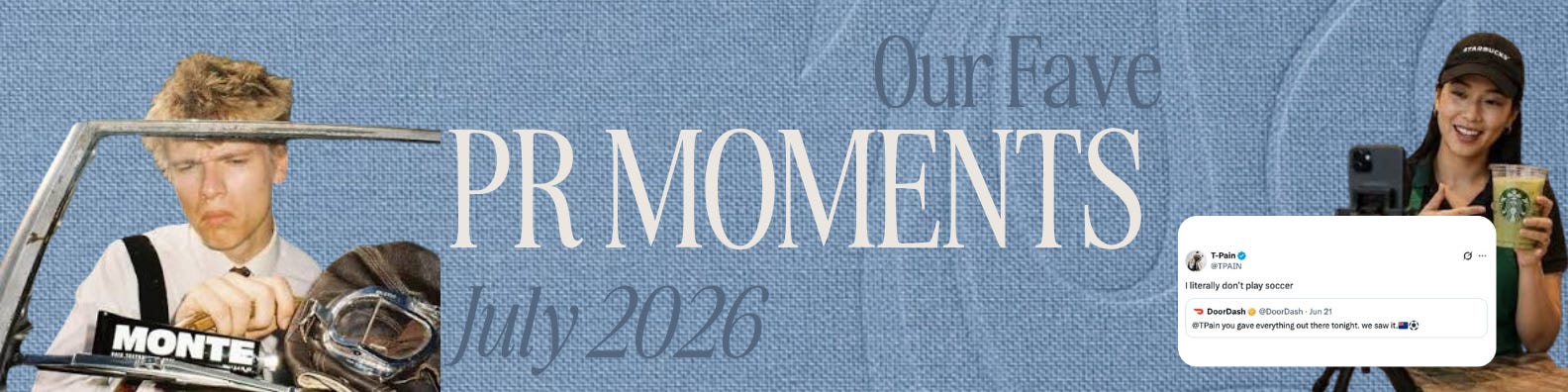
Monte Hair launched in the US this month and they’re built hype via ultra-creative, guerilla tactics with high-production, stylized reels that look like nothing else in beauty. The brand is immediately recognizable on feed, and the sustained creative push is generating real anticipation. This is what differentiation actually looks like, a consistent visual identity that stops the scroll.
DoorDash’s “T-Pain vs. Tim Payne” World Cup mix-up: DoorDash repeatedly tagged rapper T-Pain in posts about New Zealand’s breakout World Cup defender Tim Payne, playing dumb as T-Pain got increasingly (and hilariously) confused online (”I literally don’t play soccer,” “are you all okay???”). It was later revealed to be a planned campaign the whole time, built on DoorDash noticing the name coincidence. Great example of a stunt that works because it commits to the bit long enough to feel real before the reveal.
Starbucks piloted an employee creator program this month. Employees already post at three times the rate of other QSR chains, so the brand built a Creator Network on TikTok to formalize it: employees get briefs, create content, and earn revenue sharing. Gen Z learns about new products from employee-generated content, so compensating creators (instead of asking for free labor) builds loyalty both ways. Starbucks isn’t just getting authentic content, they’re respecting the people making it.
In not-so-good news: Kalshi saw Love Island’s success with brand integration and tried to manufacture the same energy with a “relatable” ad campaign targeting women. It landed flat. Audiences smell inauthenticity from a mile away.